


Meet the office of the future in 10 steps
Imagine a place where you can be yourself, feel free to be yourself and develop in the direction you are interested in. A place where you want to be – that’s what coworking spaces of the future are. There are no intricate algorithms or complicated solutions here. Instead, there is a focus on people and their needs. If you want to create a space that supports its users, learn the 10 steps that will get you there!
Explore the idea of co-working and the office of the future
Coworking and offices of the future are workplaces where people are the most important. They are distinguished by a holistic approach that makes every employee feel taken care of both physically and mentally. This type of environment ensures well-being, thus creating a comfortable working environment. The entire space forms one cohesive whole, which is green, environmentally friendly, full of modern technology, and wrapped in creative, ergonomic design.
- We have been hearing about the offices of the future for some time, but the pandemic situation accelerated the changes that were on the horizon anyway.
- In many organizations, the transition to remote work had been postponed until an unspecified “later”. However, as a result of the isolation, it had to happen immediately. We jumped in at the deep end, implementing new solutions in one fell swoop. This allowed us to realize the importance of taking care of our well-being.
- The pandemic reality also made us realize that separating professional work from our well-being and mental condition completely fails. These and other lessons resulted in the forging of an approach by which we used the new conditions to our advantage.
- Now we must follow suit and implement solutions on a completely different basis to project a favorable future for us.
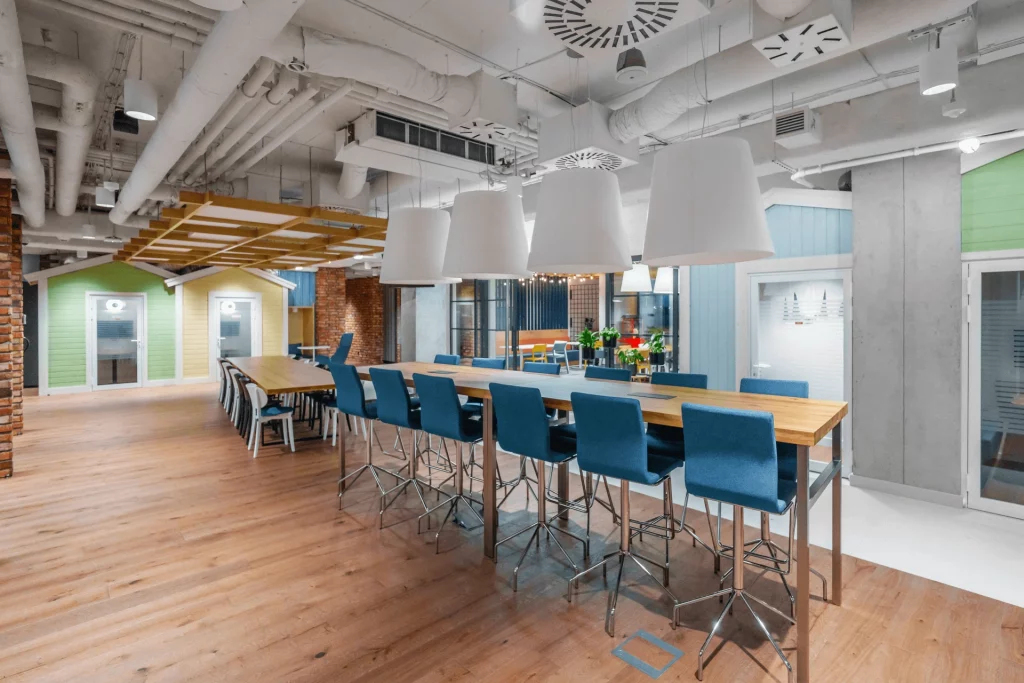
10 steps to creating a conducive workplace
- Think locally
Even if you are creating an international brand, don’t forget about local markets! As you build more locations, it’s a good idea to implement a global vision, adapting it to a specific location. What is in the area? What can attract customers? How do residents spend their time? What is the history behind the building? These are some of the questions we ask ourselves before starting the design process.
While thinking locally, respond to needs, and implement solutions that your potential customers are looking for. At the same time, it’s a good exercise in creativity!
Brain Embassy case study: During the development of the BE Mlynarska location, our partners, architects from the Archicon studio, demonstrated an original approach in creating the design, and engineers from the cmT office showed ingenuity on the construction site. We needed to do our best to reflect the atmosphere of the site and the history associated with it. Before starting the work, both companies sought information about the neighborhood and tried to get a feel for the atmosphere of the particular Warsaw neighborhood.
Tip: Before starting construction, gather your team and take a walk around the neighborhood to get a feel for the atmosphere of the surroundings. Talk to the people you meet, and write down associations and elements that draw your attention. Be sure to look for information online, too! Once you have a base, you can create a mood board and brainstorm together.
- Build the future by respecting history
Creating the new doesn’t mean completely cutting off the past. What’s more, it’s worth treating it as an inspiration!
The Brain Embassy case study: Designing our new office spaces, BE Czackiego and BE Młynarska, was an exciting challenge for us. Both locations have remarkable stories – the first building is the former home of the famous Kwadrat Theater, and the second is the legendary commercial space PDT Wola. To highlight the unique history of the building, while working on the project we made it a priority to preserve the unique character of the buildings and bring out their original beauty. The most important thing for us was authenticity! Therefore, together with our partners – cmT and Archicon – we refined the architectural elements to implement modern design solutions while respecting history.
In the case of BE Czackiego, we reflected the spirit of the theater through neon signs and lamps in the form of trumpets or a piano in the common space.
You can feel the climate of Warsaw from the old times at BE Mlynarska through the famous car Warsaw M20, a nap room designed to resemble train couchettes, and a dining room reminiscent of a legendary milky bar.
Interesting fact: During the work on PDT Wola, the Archicon team noticed that the original cornices were still preserved under the building, and the decorative glyphs around the windows. We decided not to reconstruct or repair them to preserve the original form.
So history guided us at every step – the cmT engineers overcame certain limitations resulting from the old construction, and the Kinnarps specialists selected ergonomic furniture so that the climate of Warsaw’s old era could be felt in the smallest detail.
Tip: Get to know the history of the place with your team – do some solid research together, talk to people associated with the building, find old photos, and think about how to connect the past with the future. By rendering history in the interior, you can release the spirit of a place, giving it a unique atmosphere. And this is exactly what employees are looking for now – a simple desk and chair is not enough! From our perspective, cooperation between the architect and engineers is very important. So take care of the flow of information, creating an interdisciplinary team that will collide ideas on an ongoing basis, looking at the project from a broader perspective.
- Go outside the box and give vent to your creativity
At work, try to go off the beaten path and think in new ways. It’s not easy, but it’s exciting!
Brain Embassy case study: How do we go outside the box? We are helped by the idea of co-creation – while working on BE Mlynarska, we convened our partners cmT, Archicon, and Kinnarps to brainstorm together and broaden their perspective. We also often invite our clients into the creative process. They are the ones who have identified the elements necessary in any coworking space and become the creators of the chosen zone.
Watching the Archicon team at work on BE Mlynarska, we saw how much pleasure they derived from designing the interior. Trying to combine history with Brain Embassy’s distinctive elements required them to be quite flexible. And openness! A good example is the distinctive brickwork of our coworking spaces. This time all it took was a small change, i.e. arranging it vertically instead of horizontally as always, in order to refer to the original facade of the nearby Venice Bar. As you can see, sometimes the simplest solutions turn out to be the best ones.
Going outside the box is not always quick and easy, but it is a kind of play with form that gives us great joy.
Tip: On the subject of creativity, it’s worth implementing the Design Thinking process. Stepping into the shoes of customers, an interdisciplinary team of different stakeholders, collaborative brainstorming where every idea is good, and prototyping allow you to develop really useful solutions with a WOW effect. What happens outside of work is also important in the creative process. Find time to get some exercise, go for a walk in a new place, listen to an unfamiliar playlist, or cook a yet untried dish. Everything you do in between stimulates your brain and influences creativity!
- Look for inspiration EVERYWHERE to create a positively stimulating design
Where to get inspiration from? From everywhere! Literally.
Approach design work from the level of a child’s curiosity – a peek into every nook and cranny, looking for novelty, ask why? and meet as a large group to feed each other’s creative process.
Case Study Brain Embassy: We have a lot of fun looking for inspiration when implementing our concept into historic buildings. To create an original and historically connected interior for BE Mlynarska, Archicon Studio went back in time. Sitting over a desk full of photos, the team searched for inspiring elements. Thus, over the Community Desk, you’ll find paintings on glass that refer to the original decorations of PDT Wola from the 1960s, make an inch in telephone booths in the form of those original from Warsaw’s old times, or relax on the sofa of the famous car Warszawa M20.
Design Brain Embassy is more than a reference to history, however. Together with Archicon and Kinnarps, we are also inspired by everyday work. It’s important to look at the space holistically – the effectiveness of tasks is affected by the color of the walls, the presence of plants, the ergonomics of the furniture, or the presence of other people. With care, we test coworking spaces ourselves by writing down our observations, observing, and talking to users.
Tip: Open yourself to the new! Put on invisible glasses and try to see the space in a new way. Don’t limit your ideas – write down everything that comes to mind. The free flow of thoughts poured onto paper opens the mind. That’s why we recommend you make a habit of taking notes on the phone or notebook.
- Work with smarter than you, creating a diverse team of experts
There’s a saying: Alone you go fast, but together you’ll get further! Working in a team makes us smarter, especially if we trust each other. This creates space for the free exchange of ideas without encountering judgment or criticism. The team’s interdisciplinarity broadens our perspective, also increases our creativity, opens the door to innovation, and eliminates the risk of mistakes.
Tip: The key to fruitful collaboration is to change your mindset. Treat subcontractors and collaborators as partners who want to do their best work. When brainstorming, push egos to the side – in creative work, it is not whose idea will be implemented that is most important, but whether it meets the needs of the recipient! Invite people from different walks of life into the process, i.e., representatives of subcontractors, your company’s co-workers (try to involve people from other departments, they’ll have the freshest perspective!), and customers.
- Walk in the shoes of current and potential customers to fully understand and respond to their needs
The recipients of co-working spaces are other people. Employees of startups, large corporations, event organizers, and freelancers. Each of them has a completely different perspective and needs. How do you answer them by creating one place? It’s a question that inspires action.
Case study Brain Embassy: To achieve this goal, together with partners we step into the shoes of clients. To put it another way – we peel back their perspective. We recreate the day’s work, and analyze its various stages and the specifics of the tasks. Do our clients often hold video meetings? Do they do brainstorming sessions? When do they need a focus and when do they need a retreat?
Breaking down the work into small elements and looking at coworking through the eyes of the clients (which in this case is not so difficult, since we are in part the recipients of our own spaces!) helped us isolate several spheres within them. Kinnarps, when providing Brain Embassy furniture, always takes into account what a person working in a particular space needs. As a result, in the quiet work area, we have comfortable armchairs, more wood and lamps on the desks, and in the creative meeting rooms we have colorful, ergonomic poufs or large round tables.
Tip: With your team, organize a trial workday, during which you take notes of your feelings, needs, and thoughts. What challenges do you encounter while performing your tasks? Are you comfortable? Is there something you would like to change? Ask customers (former, permanent, or potential) for help as well, and conduct in-depth interviews with them. The lessons learned during the interviews are the most valuable!
- Make sure it’s comfortable
Comfort at work affects our mood, and improving it increases efficiency. So in the office, we need conditions that will allow us to focus on our tasks. A desk that is too low, an uncomfortable chair, lighting that is too dim or a lack of fresh air will only distract us.
Case study Brain Embassy: So our main goal when designing coworking is to select furniture that each user can customize. Brain Embassy’s locations include desks with adjustable top heights, swivel chairs, and even a range of different seating (poufs, swings, stationary bikes, stools, etc.). Together with Kinnarps, we want to provide furnishings that give consumers choices at every stage of their work.
Tip: Bet on ergonomics! We recommend that you read scientific research, follow trends in work environment design, and test solutions for yourself. When you and your team organize a trial day in a coworking space, be sure to pay attention to the aspect of comfort. What gives you comfort, and what takes away from it? How does discomfort affect your work? If you have the opportunity, talk to specialists, such as physiotherapists. In addition to furniture, the space itself is also important – provide your audience with enough space to move freely in the workplace.
- Create a place that takes care of your well-being
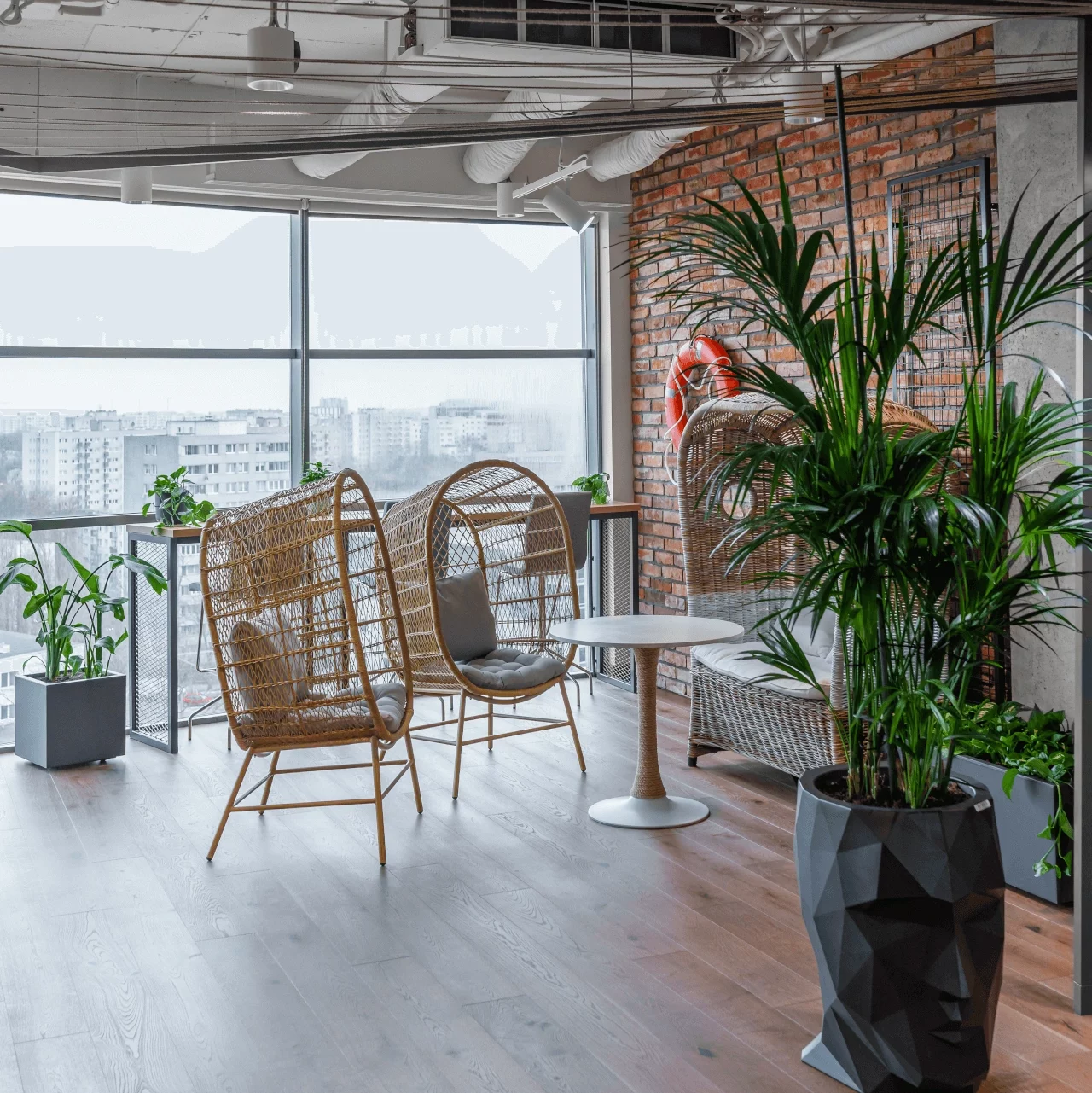
The better we feel, the more effective we are. That’s why we need a pleasant place with a homey, relaxed atmosphere to work. The presence of living plants, access to fresh air, natural light and materials such as wood or stone, muted colors (green, blue), and open space are most conducive to well-being. Plus, of course, places designed for relaxation!
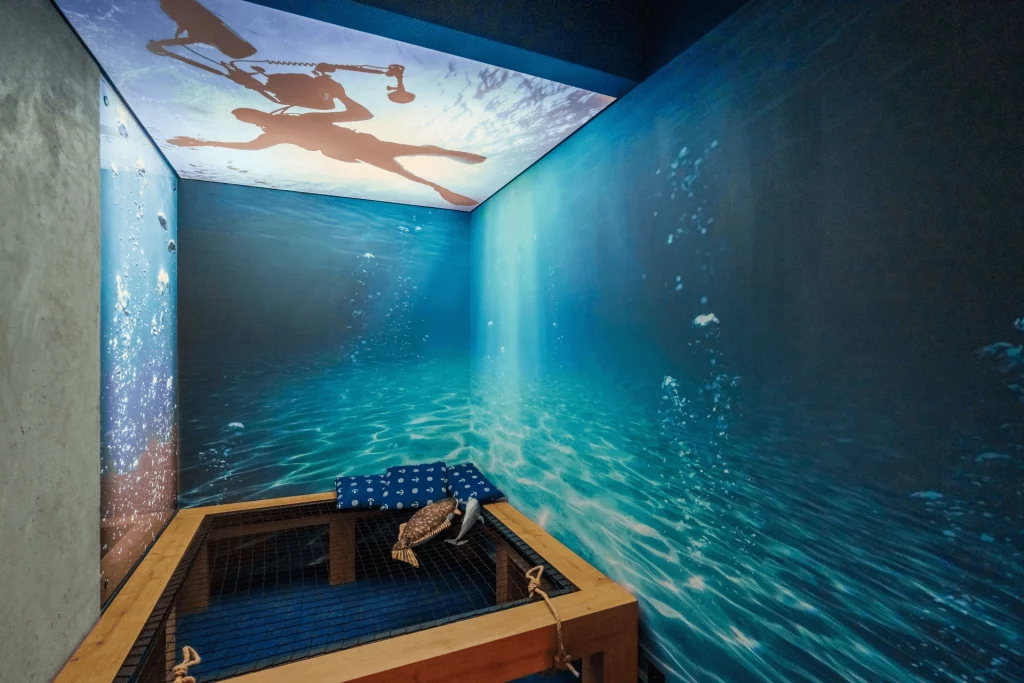
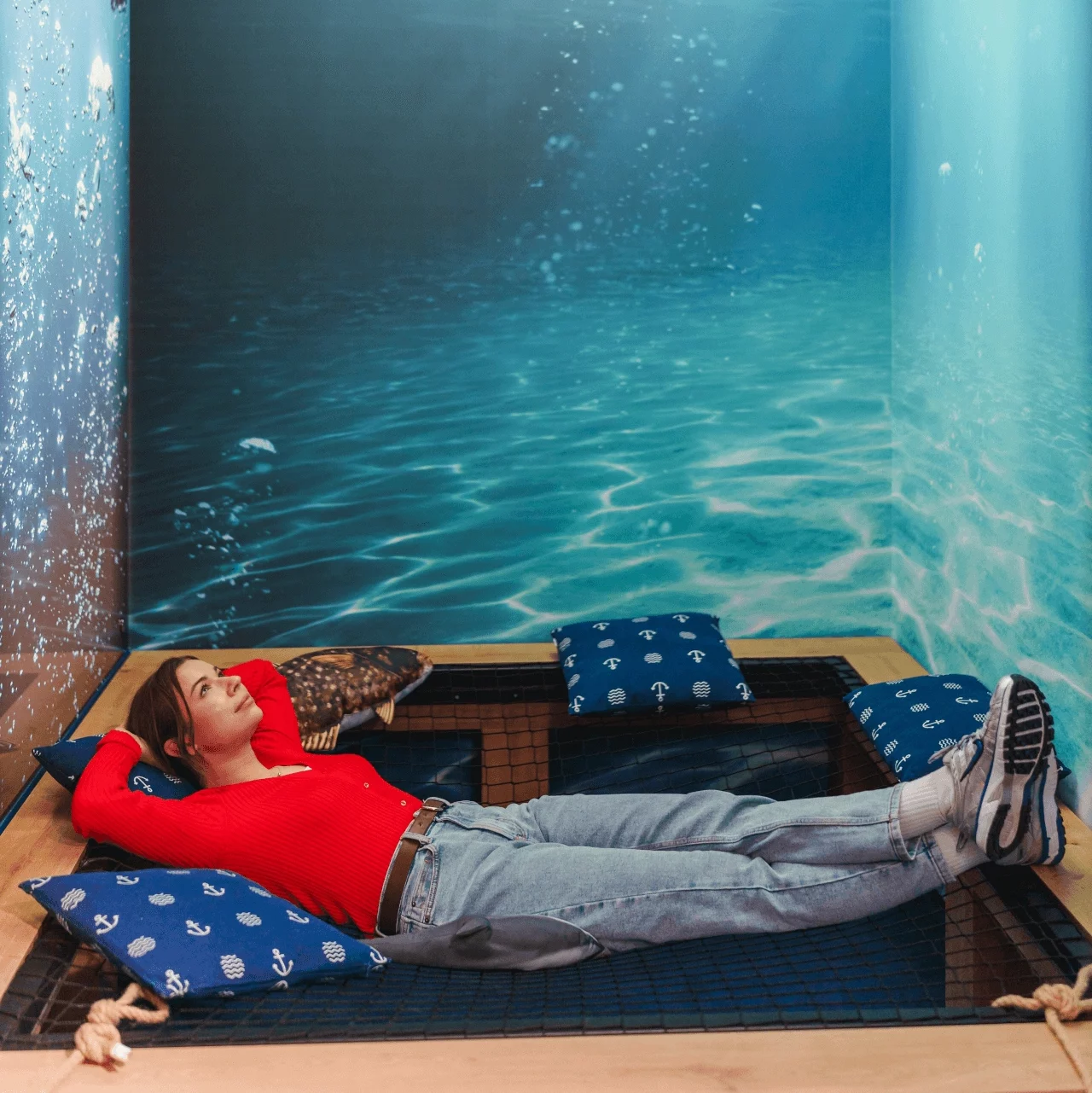
Case study Brain Embassy: In every BE coworking space, you’ll find comfortable armchairs in a quiet alley, couches in the living room, and rooms for naps! Since we always try to make the nap room have a theme, Archicon with Kinnarps specialists have a lot of fun designing. For example, in BE Czackiego you can take a nap in an orientally decorated room, in BE Mlynarska you can relax on a couchette, and in BE Konstruktorska you can reset in a jungle!
Tip: Let your main guide in coworking design be the idea of biophilic design. This is the creation of an interior in harmony with nature – green, finished with natural materials, and creating a favorable environment for relaxation. What is equally important in biophilic is the atmosphere in a given space. White-gray, modern offices often give the impression of being austere. We won’t feel at ease in such places, so make sure to warm up your space and give it a homey feel.
- Nurture community every day, because coworking is more than desks and walls
A conducive work environment is all about people. Everyone can feel how much good comes from casual conversations in the kitchen over coffee, exchanging smiles in the hallway or brainstorming together in a moment of creative block.
Brain Embassy case study: Together we get smarter and together we can do more, which is why the community development program is Brain Embassy’s main mission. How do we do it? We have a Community Team at each location – we don’t specifically call it a reception desk, because our teams have a much larger function. They are there to help you with documentation, advise you on which workshop to attend, talk to you at your leisure about life, and give you a sincere smile. In a word, they are there to support you in your daily life. In addition, we organize breakfasts where each Brainer can talk about their business, networking meetings, and a whole range of events, workshops, and Design Thinking sessions. The dots over the i’s are English classes and yoga classes where you can take a breather in pleasant company.
Tip: Create space for users to grow and integrate. What’s important here is not a one-time task, but the regular nurturing of relationships. In a group left to its own devices (unmanaged), ties can either fail to strengthen or slowly begin to loosen. Therefore, step into the role of animator and organize a variety of events for your community. Both substantive and focused on networking. The second thing people need is… presence. Let your customers feel that they can count on your team – a sense of being important and taken care of builds trust and gives them motivation to get involved in the community.
- Be open to change all the time
Creating the office of the future is work on a living organism, in which constant change is inherent. New trends, other user needs, and diverse locations make it worthwhile not to get attached to already-created solutions, but to approach novelties with curiosity.
Case study Brain Embassy: The Recording Room is a good example. Originally, our coworking spaces were not equipped with this type of room, but when podcasts and live shows began to gain popularity, we equipped the locations with rooms that allowed us to create recordings. So we keep track of what’s going on in the world, and treat each coworking as a prototype, not the final result. This allows us to change the solutions we’ve developed, add new elements to them, and test, test, test!
Tip: Get familiar with the Design Thinking method! This is the process that opens you up to change the most while allowing you to create really useful solutions. We also recommend you let go. That is – put egos aside and don’t get attached to the ideas you created earlier. Most of them have an expiration date, which, unfortunately, we do not know. When that moment comes, it’s not worth getting discouraged! It’s the natural order of things and a chance for you to develop new solutions that will help your users focus on their work.
How do we at Brain Embassy create a place that is conducive to work?
The idea of the office of the future
Before we took the first step toward building the coworking space of the future, we focused on the idea of it. We needed to work together to create a new approach to bring the vision to life and guide the way. Brainstorming together, following trends and deeply understanding the needs of different parties (our team, subcontractors, and potential clients) resulted in the idea of co-creating.
Co-creating model
How do we incorporate co-creating into the design process? The key change is the perception of the companies we work with. We invite them to join the team as partners we trust and believe that together we can create a favorable future for the work environment. We are a group of experts from different fields – by creating a new location together, everyone has the space to share their ideas.
Focusing on a common goal
The free exchange of opinions, openness to change, and the perception that the partner is smarter in a particular area allows you not to be driven by your own ego. And to focus on a common goal. Brain Embassy is an expert in creating a workplace and building a community, Kinnarps is an ergonomics specialist, Archicon knows well how to create creative design that supports the mind, and cmT, like no one else, is able to make an architect’s vision a reality and lock everything into a concrete framework. Individually, we are able to do a lot, but it is as a team that we are smarter and can achieve goals impossible for an individual.
We hope that the above steps will inspire you to create a conducive work environment. We wish you the best of luck and look forward to seeing the results!
